
Pelé
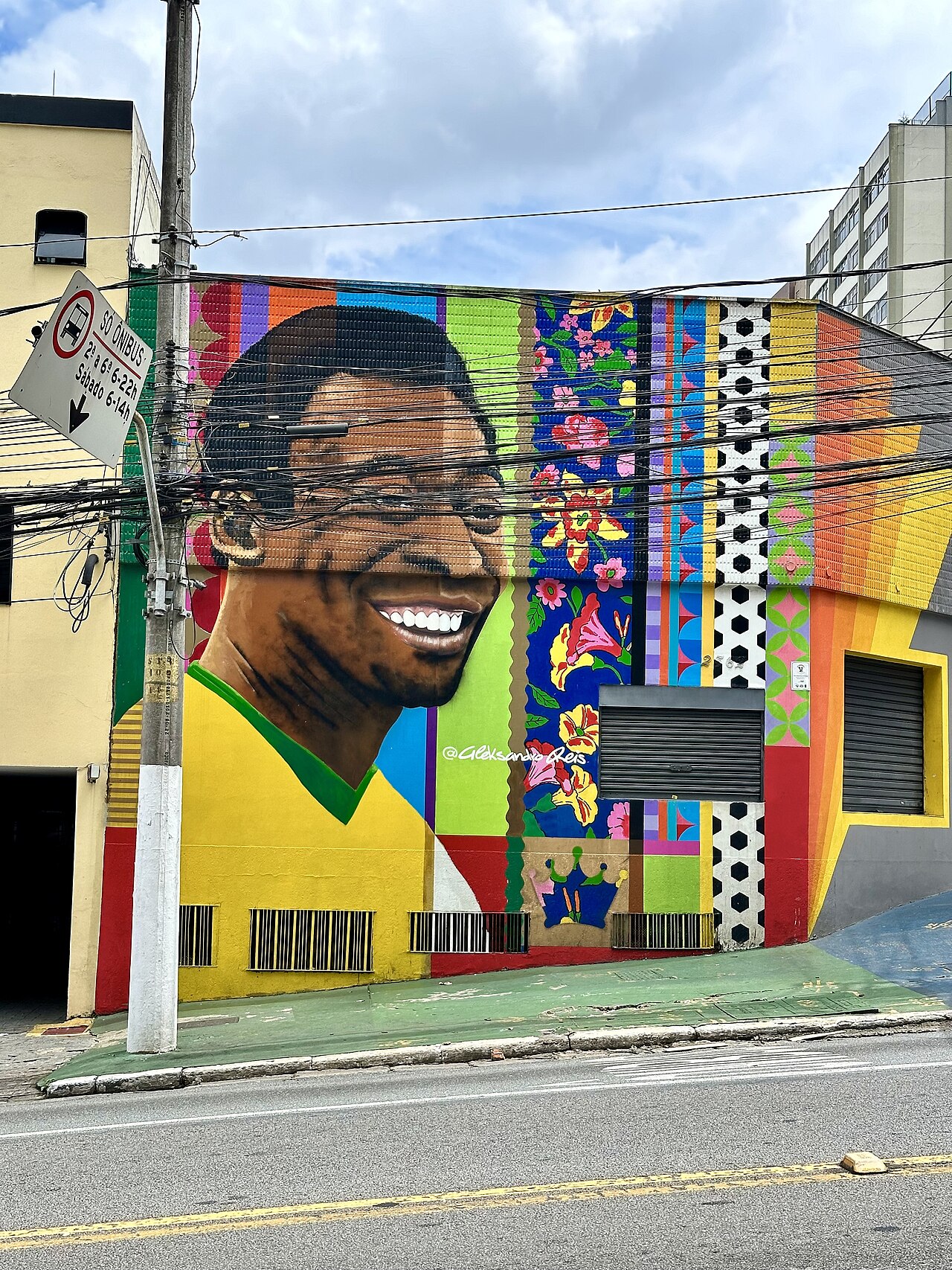
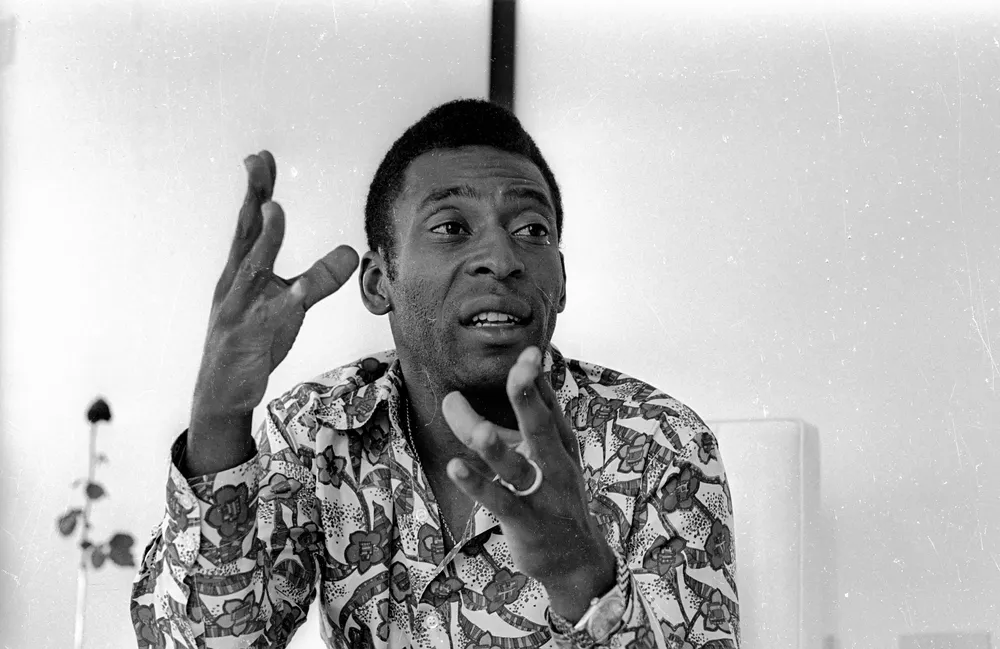
The King of Football, O Rei, who won three World Cups and scored 1,279 goals.

Slyronit · CC BY-SA 4.0
Pelé (Edson Arantes do Nascimento) was a Brazilian professional footballer who played as a forward, widely regarded as one of the greatest players in history. He was among the most successful and popular sports figures of the 20th century. His 1,279 goals in 1,363 games, including exhibition games, is a Guinness World Record. In 1999, he was named Athlete of the Century by the International Olympic Committee and was included in the Time list of the 100 most important people of the 20th century. In 2000, Pelé was voted World Player of the Century by the IFFHS and was one of the two joint winners of the FIFA Player of the Century, alongside Diego Maradona.
- Character
- Pelé (Edson Arantes do Nascimento)
- Role
- Icon / Legend
- Affiliation
- Brazil National Team, Santos FC, New York Cosmos
- Position
- Forward
Verified Timeline
Lore & Background
Pelé began playing for Santos at age 15 and for the Brazil national team at 16. During his international career, he won three FIFA World Cup titles – in 1958, 1962, and 1970 – becoming the only player to win three World Cups as a player and the youngest to win a World Cup at 17. He was nicknamed O Rei (the King) after the 1958 World Cup. With 77 goals in 92 games for Brazil, he held the record as the national team's top goalscorer for over fifty years. At club level, Pelé is Santos' all-time top goalscorer with 643 goals in 659 games. He led Santos to victory at the 1962 and 1963 Copa Libertadores and the 1962 and 1963 Intercontinental Cup. In 1961, the Brazilian government declared him an 'official national treasure' to prevent his transfer abroad. After retiring in 1977, he became a worldwide ambassador for football and was named honorary president of the New York Cosmos in 2010.
In Their Own Story
Pelé was born Edson Arantes do Nascimento on 23 October 1940 in Três Corações, Minas Gerais, Brazil, son of Fluminense footballer Dondinho and Celeste Arantes. He grew up in poverty in Bauru, São Paulo, earning money working in tea shops. Taught to play by his father, he often played with a grapefruit or a sock stuffed with newspaper. He played for amateur teams including Sete de Setembro, Canto do Rio, São Paulinho, and Ameriquinha, and led Bauru Atlético Clube juniors to two São Paulo state youth championships. In his mid-teens, he played futsal for Radium, winning the first futsal competition in the region. He credits futsal for helping him think faster on the pitch. At 14, he became top scorer in a tournament with 14 or 15 goals, saying 'That gave me a lot of confidence.' He named Brazilian playmaker Zizinho among his inspirations. At 15, Waldemar de Brito took him to Santos, telling directors he would be 'the greatest football player in the world.' He made his senior debut on 7 September 1956 against Corinthians de Santo André, scoring the first goal in a 7–1 victory. At 16, he became top scorer in the Campeonato Paulista. In 1958, he helped Santos win the Campeonato Paulista, finishing as top scorer with 58 goals, a record that still stands. After the 1958 World Cup, wealthy European clubs tried to sign him in vain; Inter Milan's contract was torn up after fan revolt, and Santos declined Valencia's agreement. In 1962, Santos won the Copa Libertadores, with Pelé scoring twice in the 3–0 final win over Peñarol. He then scored a hat-trick in the 5–2 Intercontinental Cup win over Benfica; Benfica goalkeeper Costa Pereira said, 'I arrived hoping to stop a great man, but I went away convinced I had been undone by someone who was not born on the same planet as the rest of us.' Pelé's most memorable goal, he said, was against Juventus on 2 August 1959, for which he requested a computer animation since no video exists. In March 1961, he scored the 'gol de placa' against Fluminense at Maracanã, running the length of the field and earning a two-minute standing ovation; a plaque was mounted at the stadium calling it 'the most beautiful goal in the history of the Maracanã.' Santos won the 1963 Copa Libertadores again, with five goals from Pelé, and retained the Intercontinental Cup and Taça Brasil. In 1965, Pelé was top scorer of the Copa Libertadores with eight goals, though Santos was eliminated by Peñarol.
Reader's Guide
Pelé averaged almost a goal per game throughout his career and could strike the ball with either foot. While predominantly a striker, he could also be a playmaker, providing assists with his vision and passing ability. In Brazil, he was hailed as a national hero for his accomplishments and for his outspoken support of policies to benefit the poor. His emergence at the 1958 World Cup, where he became a Black global sporting star, was a source of inspiration. Throughout his career and retirement, he received numerous individual and team awards for his performance, record-breaking achievements, and legacy. Credited with connecting the phrase 'The Beautiful Game' with football, his tremendous skill and penchant for spectacular goals made him a global star, and his teams toured internationally to take full advantage of his popularity. During his playing days, he was for a period the highest-paid athlete in the world.
Did You Know?
- Pelé was named after the American inventor Thomas Edison; his birth name was Edson Arantes do Nascimento, with the 'i' dropped due to a family preference, not a birth certificate error.
- His nickname 'Pelé' likely emerged after he mispronounced the name of his favorite player, Bilé, a goalkeeper for a local team, not Vasco da Gama.
- At 17, he became the youngest player to win a World Cup, in 1958.
- He scored 58 goals in the 1958 season overall, but the record for the Campeonato Paulista in a single season was later broken by other players and does not still stand.
- In 1961, the Brazilian government declared Pelé an 'official national treasure' to prevent him from being transferred out of the country.
Gallery
Frequently Asked Questions
Who is Pelé?
Edson Arantes do Nascimento, known as Pelé, was a Brazilian forward widely regarded as the greatest player of all time. He earned the nickname The King for his immense skill and record-breaking achievements during his career.
What clubs did Pelé play for?
His professional career began at Santos FC in Brazil, where he spent most of his playing years before moving to New York Cosmos in the United States. He also represented the Brazil National Team on the international stage with great success.
How many World Cups did Pelé win?
Pelé is the only player in history to win three FIFA World Cup titles, securing victories for Brazil in 1958, 1962, and 1970. This unique achievement cemented his legacy as a global sporting icon.
How many goals did Pelé score?
He holds the Guinness World Record for scoring the most goals in a career, with an official count of 1,279 goals across 1,363 games including friendlies. This statistic highlights his extraordinary consistency and finishing ability over two decades.
Why is Pelé considered important?
Recognized as the Athlete of the Century by the International Olympic Committee, he transformed football into a worldwide phenomenon through his talent and popularity. His influence extends beyond sports, making him one of the most significant cultural figures of the 20th century.
More in Players & Legends
Elsewhere in the FIFA universe
Spotted an error? Know more?
This is a living reference — every entry is fact-audited, and reader corrections feed straight into our audit queue. Suggest an edit · See this site's audit record